

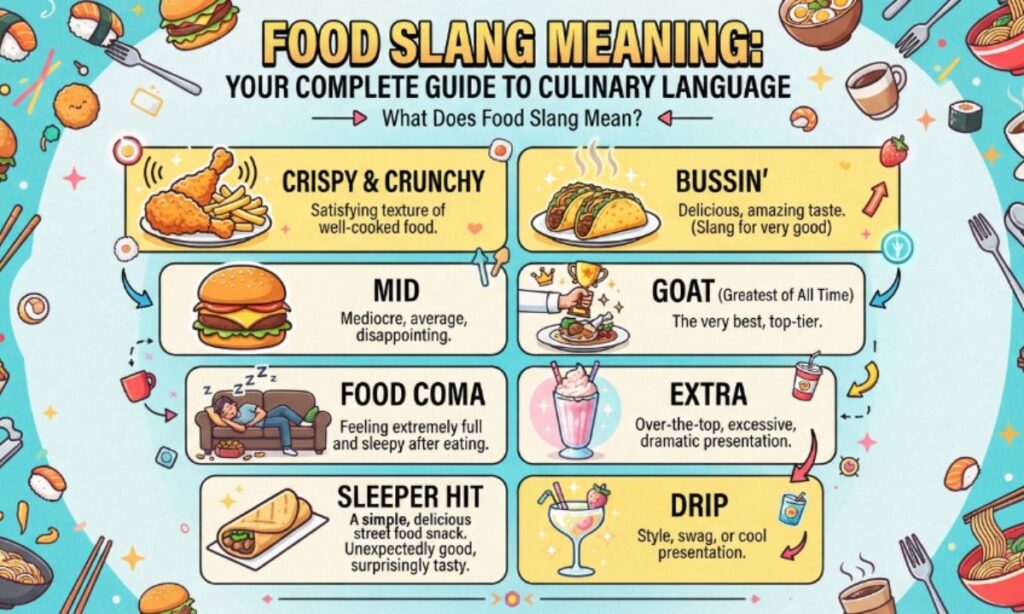
Ever called someone a “snack” without knowing why? You’re already speaking food slang fluently, whether you realize it or not. This isn’t just internet noise it’s a whole coded language hiding in plain sight, and you’re using it every day.
From “bread” meaning cash to “bussin” meaning delicious, food slang has quietly taken over how you text, scroll, and talk. Skip this guide, and you’ll keep missing what half your group chat actually means.
Food Slang Quick Reference Table
| Term | Meaning | Tone | Common Age Group |
| Snack | Attractive person | Playful | Gen Z |
| Tea | Gossip | Casual | Gen Z |
| Bread | Money | Casual | Millennials/Gen Z |
| Sauce | Style, confidence | Positive | Gen Z |
| Cheese | Money | Casual | Millennials |
| Toast | Failed/finished | Casual | Gen Z |
| Jam | Favorite thing | Positive | Millennials |
| Egg | Beginner | Neutral | Gaming/Youth |
This table covers the most searched food slang words at a glance, so you can jump straight to the meaning you need.
What Is Food Slang? Meaning & Origin
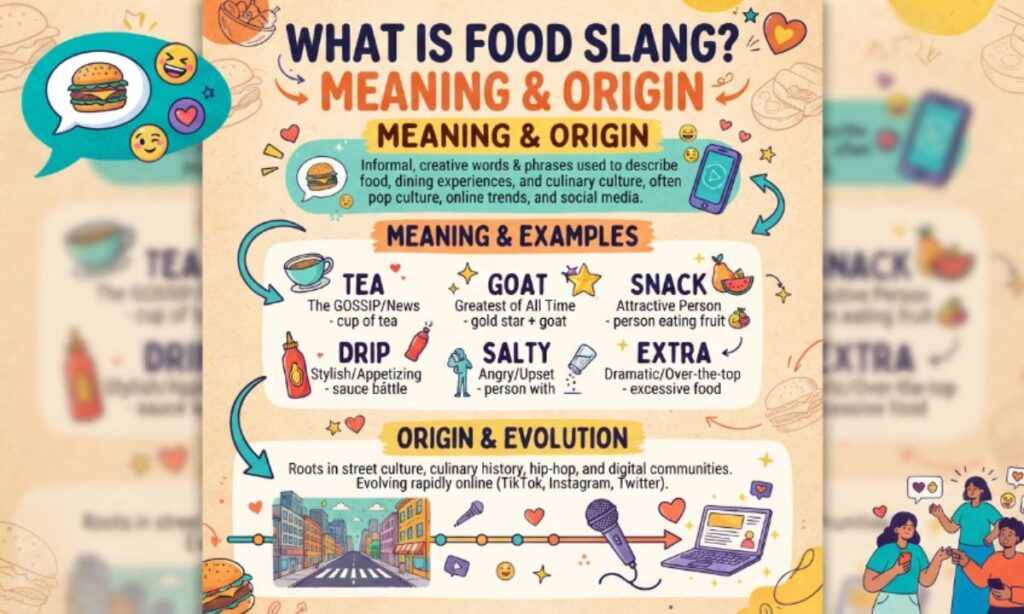
Food slang meaning is simple: everyday food words used as metaphors in casual conversation instead of literal descriptions. It’s part of a larger pattern of slang phrases and informal vocabulary that has always existed in everyday conversation.
Like most slang generations before it, food slang keeps evolving as language evolution pushes old terms out and brings trendy expressions in.
Where Food Slang Really Comes From
Most food slang didn’t start as internet trends it traces back to Black culture, hip-hop music, and AAVE long before social media existed. Terms like “bread” and “sauce” spread from tight-knit communities into mainstream youth culture, picking up speed once memes and messaging apps took over. Understanding this origin gives real context to why these words carry more weight than random internet jokes.
AAVE, Hip-Hop & Internet Roots
Most popular food slang including bread, tea, and sauce traces back to African American Vernacular English (AAVE), hip-hop music scenes, and Black internet culture before spreading into mainstream youth culture. From there, memes and messaging apps did the rest of the work, pushing terms across platforms fast.
This is why food-related slang often feels tied to social media slang rather than something invented by any single generation.
27 Food Slang Terms & Meanings
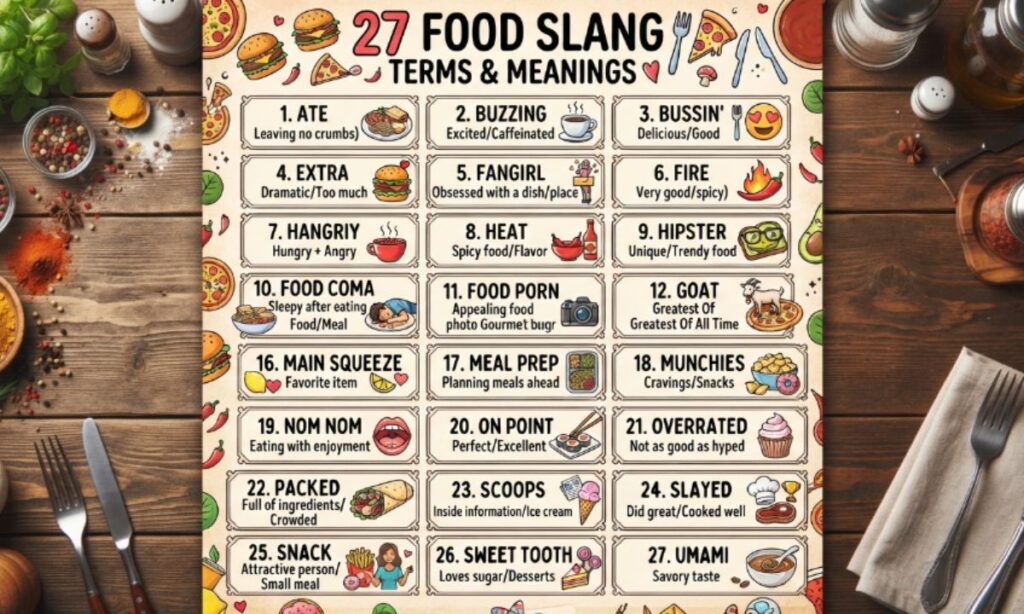
Below are the most common food slang words people search for, along with quick real-life conversation examples.
Snack
Meaning: An attractive or stylish person. Example: “She walked in looking like a whole snack.” Is it still trending? Yes
Tea
Meaning: Gossip or inside info the classic slang for gossip. Example: “Spill the tea, what happened?” Is it still trending? Yes
Bread
Meaning: Money one of the most common terms for slang for money. Example: “Gotta get up early to make that bread.” Is it still trending? Yes
Sauce
Meaning: Style or confidence. Example: “New fit? You’ve got sauce today.” Is it still trending? Yes
Cheese
Meaning: Money, older cousin of “bread.” Example: “That job pays decent cheese.” Is it still trending? Declining
Cookie
Meaning: A charming or cute person. Example: “Your niece is a total cookie.” Is it still trending? Old school
Honey
Meaning: A warm nickname for someone sweet. Example: “Thanks for that, honey.” Is it still trending? Old school
Peach
Meaning: Someone pleasant or attractive a common slang for attractive person. Example: “She’s a real peach.” Is it still trending? Declining
Lemon
Meaning: Something disappointing or defective. Example: “That car turned out to be a lemon.” Is it still trending? Old school
Apple
Meaning: A wholesome, trustworthy person. Example: “He’s a good apple.” Is it still trending? Declining
Sugar
Meaning: Flattery or affection. Example: “Thanks a bunch, sugar.” Is it still trending? Old school
Jelly
Meaning: Jealous playful slang for jealousy. Example: “Now I’m jelly of your trip.” Is it still trending? Declining
Spice
Meaning: Excitement or drama. Example: “That reunion had real spice.” Is it still trending? Yes
Pickle
Meaning: A tricky situation common slang for difficult situation. Example: “I’m in a real pickle right now.” Is it still trending? Yes
Hot Potato
Meaning: A controversial topic slang for controversial topic nobody wants to touch. Example: “That’s a hot potato in this office.” Is it still trending? Yes
Banana
Meaning: Acting silly. Example: “Stop going bananas over this.” Is it still trending? Declining
Cupcake
Meaning: A gentle, sweet person. Example: “She’s such a cupcake.” Is it still trending? Old school
Toast
Meaning: Failure slang for failure or being finished. Example: “Miss this deadline and I’m toast.” Is it still trending? Yes
Jam
Meaning: A favorite thing slang for favorite thing or song. Example: “This is literally my jam.” Is it still trending? Yes
Nacho
Meaning: “Not your” used in “nacho business.” Example: “Why ask? It’s nacho business.” Is it still trending? Declining
Butter
Meaning: Flattery slang for flattery, similar to sugar. Example: “Stop buttering me up.” Is it still trending? Old school
Noodles
Meaning: Confused thinking. Example: “My brain’s noodles today.” Is it still trending? Emerging
Milkshake
Meaning: Personal charm that draws attention. Example: “She’s got that milkshake energy.” Is it still trending? Yes
Donut
Meaning: Someone acting foolish. Example: “Forgot my keys again, I’m a donut.” Is it still trending? Declining
Egg
Meaning: A beginner, especially in gaming. Example: “First match ever? You’re still an egg.” Is it still trending? Emerging
Candy
Meaning: Visually attractive “eye candy.” Example: “That actor is total eye candy.” Is it still trending? Yes
Taco
Meaning: A fun person or event. Example: “Tonight’s gonna be a taco.” Is it still trending? Emerging
Read Also This Blog Slang for Clothing
Food Slang for Money Explained
Money-related food slang is one of the biggest categories in informal vocabulary, especially across hip-hop and internet culture.
Bread, Dough, Cheese & Sauce
| Term | Meaning | Example Sentence |
| Bread | Money/income | “Working overtime for that bread.” |
| Cheese | Money | “That gig brings in decent cheese.” |
| Dough | Money | “He’s got dough to spend.” |
| Sauce | Style tied to success | “New sauce, new confidence.” |
Food Slang for Drugs Explained
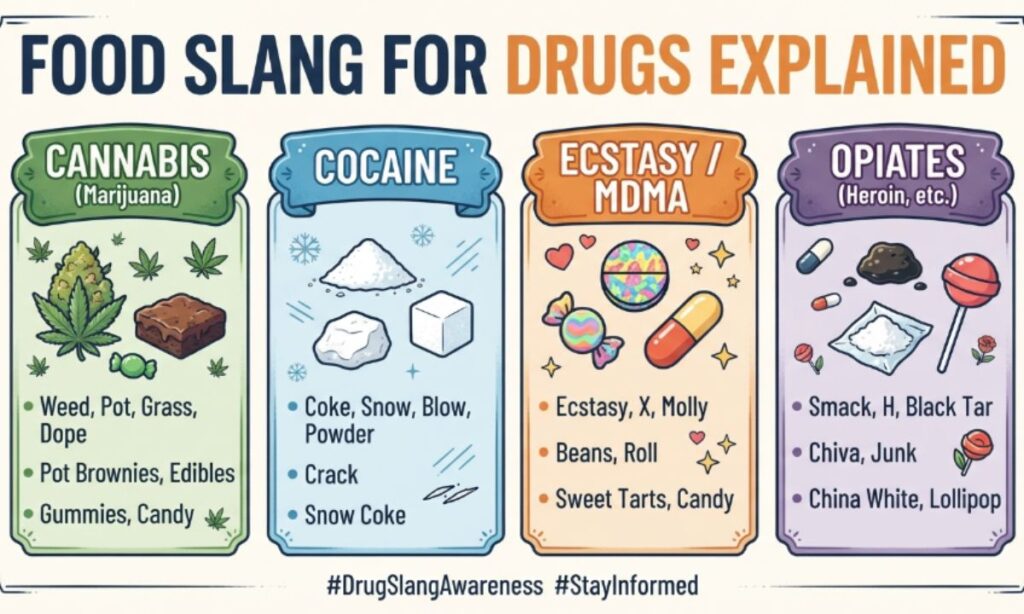
Some food words double as coded slang in drug-related contexts a use case separate from casual compliments or money talk. Terms like “sugar,” “ice,” or “candy” can shift meaning entirely depending on context, which is why context and tone matching matters so much when reading slang online.
Always read the full sentence before assuming meaning, since the same word can carry very different weight depending on the conversation.
Slang for Eating Food
Beyond naming the food itself, English has a whole set of casual words just for the act of eating “chow down,” “grub up,” “nosh,” and “munch” all mean the same simple thing. These terms show up constantly in food slang, especially in casual invites like “let’s grab some grub.” They’re informal, quick, and made for everyday conversation rather than formal writing.
Chow, Grub, Nosh & Munch
- Chow casual word for food or eating (“Let’s chow down”)
- Grub informal term for a meal (“Grab some grub”)
- Nosh light snacking, popular in UK slang
- Munch casual eating, often used for snacks
These terms are less about meaning and more about describing the act of eating itself in casual tone.
Unique Words for Food
Beyond mainstream terms, English is full of regional and unique words for food that rarely make it into standard slang lists:
- Grindage food in general (US slang)
- Scran UK term for food
- Kai food, common in New Zealand slang
- Tucker Australian food slang
Good Food Slang You Should Know
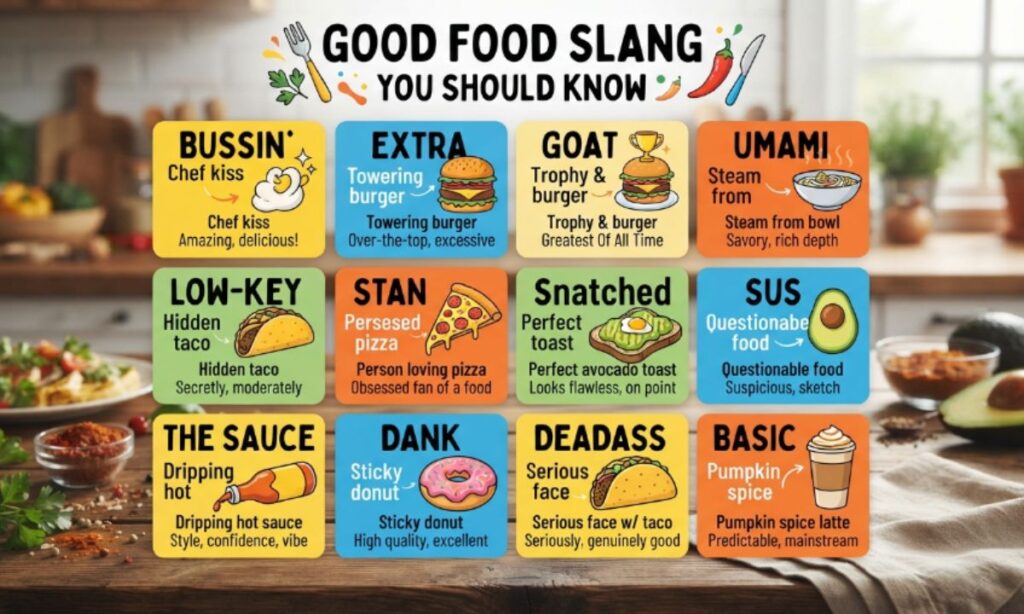
Some food slang exists purely to hype things up no drama, no shade, just pure praise. Terms like “bussin,” “fire,” and “slaps” all mean the same thing: something is genuinely excellent. These words spread fast online because they’re short, punchy, and instantly understood.
Bussin, Fire, Slaps & Ate
Good food slang describes things not just literal food as excellent or impressive:
- Bussin extremely good, especially food
- Fire excellent, impressive
- Slaps very good, often used for music or food
- Ate did something exceptionally well (“She ate that look”)
These trendy expressions are heavily driven by Gen Z slang and spread fast through short-form video.
Food Slang in English Explained
Food slang in English varies noticeably by region. British food slang includes terms like “scran” and “brekkie,” while Australian food slang leans toward “tucker” and “arvo snack.” American English tends to favor “grub” and “chow,” showing how the same language produces very different slang phrases depending on location.
Food Slang Crossword Clue (4 Letters)
Crossword puzzles often use short food slang answers. A common 4-letter food slang crossword clue answer is “GRUB,” referring casually to food or a meal. Other short answers puzzle solvers search for include “NOSH” and “CHOW,” depending on the clue’s phrasing.
Food Slang in Top Boy Explained
British slang from shows like Top Boy popularized food-linked terms for money and status, blending street slang with everyday conversation. Words like “bread” and “cheese” for money appear frequently in this context, reflecting real UK street vocabulary rather than invented dialogue.
Food Slang by Generation
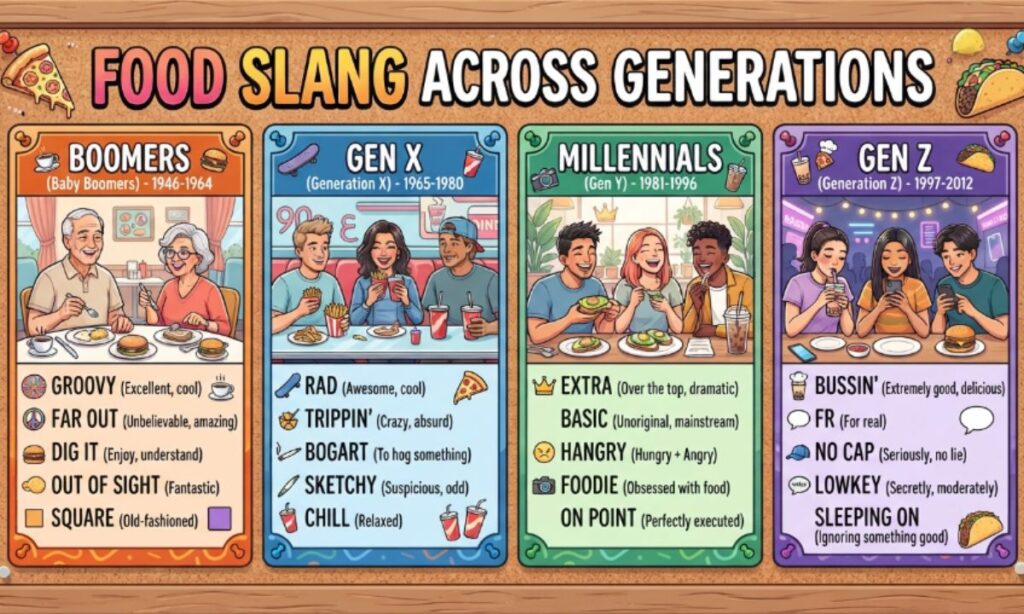
Slang doesn’t sound the same across generations what feels current to one age group reads as dated to another. Food slang by generation shows this shift clearly, moving from gentle, traditional terms toward fast-spreading, internet-driven expressions. Comparing them side by side reveals exactly how language habits change over time.
Boomers & Gen X Slang
Older generation slang favors simple, traditional terms like honey, sugar, and cupcake friendly but rarely used by younger speakers today.
Millennial Slang
Millennial slang popularized “bread,” “cheese,” and “jam,” often tied to early internet forums and music culture rather than short-form video.
Gen Z Slang
Gen Z slang blends food words with internet culture fast “snack,” “tea,” and “sauce” spread through memes and messaging apps within days, not years.
Social Media & Food Slang Trends
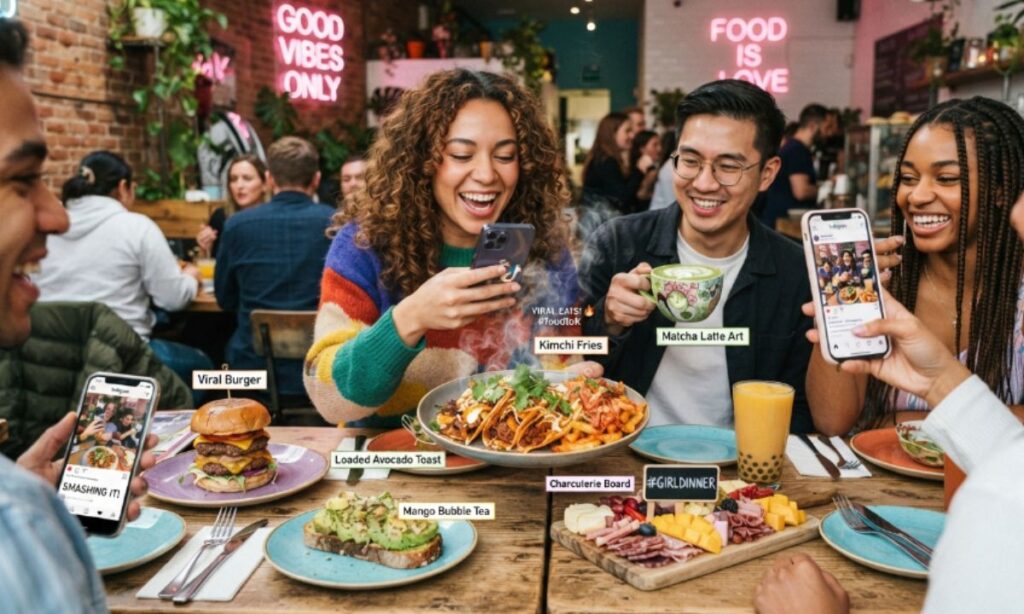
Social media didn’t just spread food slang it accelerated it. A single TikTok video can turn a niche term into everyday vocabulary within days, not years. This rapid-fire cycle is why food slang trends now shift faster than any generation before could keep up with.
TikTok’s Role in Spreading Slang
Social media slang, especially on TikTok, is the biggest driver behind modern food slang today. A single video can turn a niche phrase into a trending expression used across age group usage within weeks.
This rapid spread also means slang comparison between platforms shows real differences a term big on TikTok might barely register on other platforms.
Food Slang Misconceptions & Myths
- Myth: All food slang means the same thing everywhere reality: meaning shifts heavily by region and context.
- Myth: Food slang is only for teens slang reality: adults slang also borrows heavily from food terms, especially for money.
- Myth: Slang never changes reality: outdated slang gets replaced constantly as new trendy expressions emerge.
How to Use Food Slang Naturally
Match your tone to the setting playful tone works with friends, but professional settings usually call for formal vs informal language choices instead. Casual tone slang like “that’s fire” fits texting and everyday conversation, not workplace emails.
To sound natural (without awkward delivery), only use terms you’ve actually heard used, and skip anything you’re unsure about.
Common Food Slang Mistakes to Avoid
- Using outdated slang that sounds forced today
- Slang in workplace emails or formal documents
- Overusing slang until sentences feel unnatural
- Ignoring context and tone matching, leading to confusion
- Mixing regional slang incorrectly (e.g., US terms in UK contexts)
Food Slang Controversy Explained
Much of today’s food slang originated in Black culture and AAVE, and its mainstream spread has sparked real debate about credit and origin. Critics argue that widespread use without acknowledging that history erases where these slang phrases actually came from.
This controversy is part of a bigger conversation about how youth culture borrows language without always crediting its roots.
Is Food Slang Still Trending?
Yes food slang remains active in 2026, though individual terms rise and fall constantly. Words like “bussin” and “snack” are still going strong, while older terms like “cupcake” and “honey” now read as outdated slang rather than trendy expressions.
Practice: Test Your Food Slang
Think you’ve got food slang down? Put it to the test with quick fill-in-the-blanks, multiple choice, and rewrite exercises below. It’s the fastest way to check if these terms actually stuck.
Fill in the Blanks
- That new phone is a total ______ (waste of money).
- Spill the ______, what happened?
- I’m grinding hard for that ______.
Choose the Correct Slang
Something excellent: A) Bussin B) Pickle C) Lemon Money: A) Jam B) Bread C) Banana
Rewrite Into Slang
- “I am jealous of your new car.” → _______
- “That song is my favorite.” → _______
Frequently Asked Questions
What is the slang word for food?
“Grub,” “chow,” “nosh,” and “munch” are common slang words for food, all used casually to describe eating or a meal instead of formal language.
What is Gen Z slang for food?
Gen Z rarely uses plain food slang for actual food, but “grub” still works; they’re more likely to call food “bussin” if it tastes amazing.
What is Gen Z slang for delicious?
In Gen Z food slang, “bussin” means extremely delicious, while “slaps” and “fire” also describe food that tastes exceptionally good.
What is “ate” in Gen Z slang?
“Ate” is Gen Z slang meaning someone did something exceptionally well, often paired with “and left no crumbs” for extra emphasis.
What does “bread” mean in food slang?
In food slang, “bread” means money, popularized through hip-hop culture, as in “chasing that bread” to describe working hard for income.
What is a food slang word for money?
“Bread,” “cheese,” and “dough” are the most common food slang words for money, all popular across hip-hop and everyday casual conversation.
What does Gen Z call a hot guy?
Gen Z often calls an attractive guy a “snack,” a popular food slang term meaning someone visually appealing, stylish, or good-looking overall.
What is the food slang meaning of “tea”?
In food slang, “tea” means gossip or juicy information, as in “spill the tea” sharing exciting or dramatic news with friends.
What is the most popular food slang term today?
“Bussin” is currently the most popular food slang term, widely used on TikTok and social media to describe something extremely good or delicious.
Conclusion
Food slang keeps evolving as fast as the internet itself, blending everyday food words with money, attraction, gossip, and emotion. From “bread” meaning money to “snack” describing someone attractive, these terms reflect deeper cultural roots in AAVE, hip-hop, and youth culture, later amplified through TikTok and social media.
While older slang like “honey” and “cupcake” fades into nostalgia, newer expressions like “bussin” and “ate” dominate Gen Z conversations today. Understanding food slang meaning isn’t just about sounding trendy it’s about reading tone, context, and generation correctly before using any term. Slang will keep shifting, but food will always remain one of language’s favorite metaphors for people, money, and moments worth talking about.
