

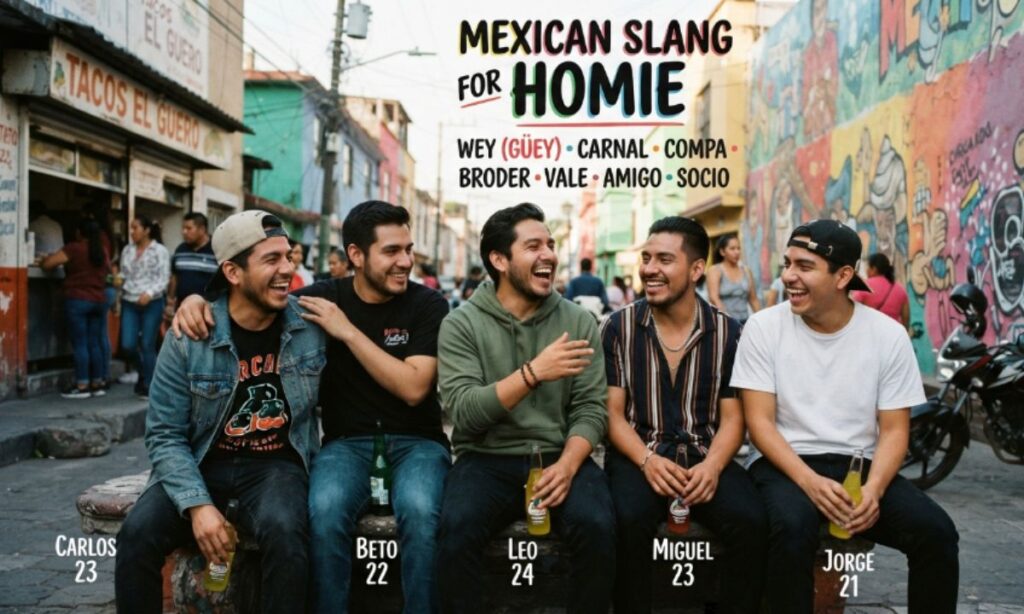
One word can tell you everything about Mexican friendship culture. Say “güey” wrong, and you’ll sound like a tourist. Say it right, and you’re instantly one of the crew. That’s the power of Mexican slang for homie — it’s not just vocabulary, it’s belonging.
You’ve probably wondered how to say homie in Spanish without sounding stiff or textbook. The truth is, homie in Spanish slang shifts depending on who you’re talking to and where you are. From casual Mexican slang words for friend like güey and cuate, to deeper terms like carnal, Spanish slang for homie carries real emotional weight behind every word.
Quick Reference Table for Homie Slang
Here’s a snapshot of the most common Mexican slang words for homie, so you know exactly when and how to use them.
| Slang Term | Meaning | Tone |
| Güey | Dude / Bro | Casual |
| Carnal | Brother / Homie | Loyal |
| Compadre | Close friend | Respectful |
| Cuate | Buddy | Friendly |
| Banda | Crew / Group | Social |
| Broder | Bro | Chill |
| Amigo | Friend | Neutral |
| Pana | Pal | Warm |
| Camarada | Comrade | Loyal |
| Hermano | Brother | Emotional |
What Does Homie Mean in Mexico?
In Mexico, “homie” doesn’t translate to one single word — it’s a whole category of Mexican slang terms used for a close friend, buddy, or crew member. Each word carries a slightly different flavor depending on region, age, and relationship.
That’s why there are so many slang for “friend” in Mexican Spanish options instead of just one fixed term.
19 Mexican Slang Words for Homie
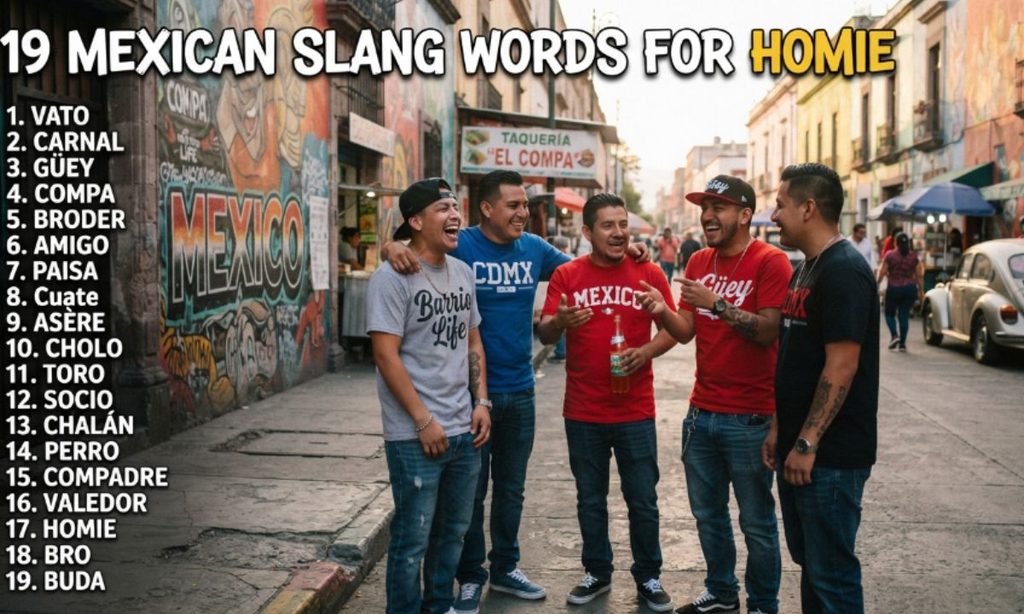
These are the real words Mexicans use for friend, ranked from most common to more niche. Each one fits a different tone, from playful to loyal to respectful.
Güey
The most common way to say “dude” or “bro” in casual conversation. Used constantly among friends, regardless of age.
Carnal
Means “blood brother,” used for a deeply loyal, trusted friend. This is one of the strongest bonds in Mexican slang.
Compadre
A respectful, slightly older-generation term for a close, trusted friend, often used jokingly among adults.
Cuate
A classic, friendly word for buddy or pal, common in everyday Mexican Spanish.
Banda
Refers to your friend group, crew, or squad — not one person, but the whole gang.
Broder
A Spanish-flavored version of “brother,” popular with younger, casual crowds.
Amigo
The standard Spanish word for friend, but often used casually like “buddy” in daily talk.
Pana
A warm, relaxed term for pal, popular both online and offline.
Camarada
An older-school word meaning loyal companion or trusted ally.
Hermano
Literally “brother,” used emotionally for someone you consider family.
Viejo
Literally “old man,” but affectionately used between close buddies.
Colega
A friend who’s also a colleague — polite, work-friendly slang.
Primo
Means “cousin,” used jokingly for a close friend.
Read Also This Blog Piper Name Meaning
Loco
Literally “crazy,” but used playfully for an impulsive, fun friend.
Jefe
Means “boss,” used respectfully and humorously among friends.
Compita
A warm, affectionate way to say little buddy.
Manito
Short for “hermanito” (little brother), a warm term for a close friend.
Padrino
Means “godfather,” used for a mentor-like, respected friend.
Socio
Means “partner,” used for a trusted friend or associate.
Formal vs Informal Homie Terms

Not every word on this list works everywhere. Knowing when to use slang versus formal language keeps your Mexican Spanish sounding natural, not awkward.
- Informal (casual conversation): Güey, Broder, Loco, Compita, Banda
- Semi-formal (respectful tone): Compadre, Camarada, Padrino, Colega
- Neutral (works anywhere): Amigo, Hermano, Primo
Male and Female Slang Versions
Many Mexican slang words for friend have both male and female forms, depending on gender agreement rules in Mexican Spanish.
| Male Form | Female Form | Meaning |
| Güey | Güey (unisex) | Dude/Bro |
| Cuate | Cuata | Buddy |
| Compadre | Comadre | Close friend |
| Primo | Prima | Cousin-friend |
| Viejo | Vieja | Buddy |
| Amigo | Amiga | Friend |
Mexican Slang for Homie Urban Dictionary
Search Mexican slang for homie urban dictionary, and you’ll mostly see güey, carnal, and broder topping the list — with definitions leaning toward “dude,” “bro,” or “close friend.” Urban Dictionary entries often skip the regional nuance real Mexican Spanish speakers use daily.
Funny Mexican Slang for Homie
Some terms lean playful rather than serious. Funny Mexican slang for homie includes words like loco (crazy friend), viejo (old man, said to a young buddy), and jefe (boss, said jokingly to a regular friend).
Mexican Slang for Gangster
Mexican slang for gangster is a separate category from homie slang, often tied to street culture rather than friendship. Words like vato or cholo fall here — they describe a tougher persona, not a casual buddy, so they shouldn’t be confused with warm terms like carnal or hermano.
Wassup Homie in Spanish

Wondering how to say “wassup homie” in Spanish? The most natural version is “¿Qué onda, güey?” or “¿Qué pedo, carnal?” — both are casual greetings used constantly in everyday conversation among friends
Mexican Slang Insults
Not all Mexican slang is friendly. Mexican slang insults exist alongside homie terms, and context matters a lot — words like güey can shift from “dude” to mildly insulting depending on tone, so pay attention to how it’s said, not just what’s said.
Mexican Slang for Dude
Looking for Mexican slang for dude? Güey is the top choice, followed by broder and loco for a more casual, younger feel.
Mexican Slang for Man
For Mexican slang for man, terms like viejo, jefe, and compadre work well, especially among adult speakers.
Group of Friends in Spanish Slang

When talking about a group of friends in Spanish slang, banda is the go-to word — it means your whole crew or squad, not just one buddy.
Old vs New Homie Slang Terms
This generational slang comparison shows how usage shifts across age groups, mixing traditional Mexican Spanish with internet culture and English-Spanish hybrid slang.
- Gen Z slang: Güey, Broder, Banda — often mixed with social media slang and English-Spanish hybrid terms
- Millennial slang: Cuate, Pana, blended with newer internet expressions
- Older generations: Compadre, Camarada, Padrino — more traditional terms, more respectful tone
Regional Differences Across Mexico
Mexican Spanish varies by region, so regional dialects shape which slang feels natural where.
| Region | Common Terms |
| Mexico City (Chilango) | Güey, Broder, Banda |
| Northern Mexico | Carnal, Compa, Viejo |
| Southern Mexico | Cuate, Hermano, Colega |
How to Use This Slang Naturally
Using slang well is about context and social setting, not just knowing words.
- Match the tone — casual settings call for casual slang
- Read the room — group chats and work meetings need different words
- Know your audience — close friend vs. new acquaintance changes the term
Common Mistakes Using Homie Slang
Avoid these common slang mistakes to sound natural instead of forced.
- Using outdated slang that younger speakers don’t relate to
- Using casual slang in formal writing or professional settings
- Overusing slang until it feels unnatural or try-hard
Social Media Buzz Around This Slang
Mexican slang for homie thrives online. Social media slang and internet culture have pushed words like güey and broder into global meme culture, mixing with English-Spanish hybrid slang across TikTok and Instagram captions.
Practice Your Mexican Slang Skills
Test what you’ve learned with these quick exercises.
Fill in the Blanks
- “Hey ______, want to grab food?”
- “The ______ is meeting tonight.”
- “Thanks for helping me move, ______.”
Choose the Correct Slang
- Which word means “dude”? a) Güey b) Padrino c) Colega
- Which refers to a group of friends? a) Banda b) Primo c) Viejo
- Which slang shows strong loyalty? a) Carnal b) Amigo c) Socio
Rewrite Into Slang
- “Hello my friend, how are you?”
- “My friends are coming tonight.”
- “Thank you for helping me.”
Frequently Asked Questions
What is slang for bro in Mexico?
The most common Mexican slang for homie meaning “bro” is güey, followed by broder and carnal. Güey works in nearly any casual conversation among friends.
What do Mexicans call their friends in slang?
Mexicans use words like güey, carnal, cuate, and amigo. These are the core Mexican slang for homie terms used daily across regions and age groups.
How do Mexicans say “buddy”?
Cuate and pana are common ways to say “buddy” in Mexican Spanish. Both fit casual, friendly conversations without sounding overly formal or distant.
What is a slang word for a dude in Mexican?
Güey is the top Mexican slang for homie when referring to a dude. Broder and loco also work in casual, younger, informal conversations.
How do Mexicans say “let’s go”?
Mexicans commonly say “vámonos” or “ándale” to mean “let’s go.” Both are casual, everyday expressions used constantly among friends and family.
How do Mexicans say “guy”?
Güey, vato, and viejo are common Mexican slang terms for “guy.” Güey remains the most versatile and widely used across different age groups.
Is “guey” an insult?
Not usually — güey mostly means “dude” or “bro.” However, tone matters, and it can sound mildly insulting depending on context and delivery.
How do Mexicans say “boyfriend”?
Mexicans typically say “novio” for boyfriend. Casually, some also use “morro” or “chavo,” though these aren’t part of core Mexican slang for homie.
How do Mexicans say handsome?
Mexicans commonly say “guapo” for handsome. Some also use “buenote” casually, though this falls outside typical Mexican slang for homie or friend terms.
Conclusion
Mexican slang for homie isn’t a single word — it’s a whole vocabulary built on loyalty, tone, and closeness. Güey, carnal, and broder dominate everyday speech, while compadre and camarada carry more respect and history. If you’re wondering how to say homie in Spanish, context decides the right pick: casual friends call for güey, deep loyalty calls for carnal, and group settings call for banda.
Knowing homie in Spanish slang means reading tone, region, and relationship before picking a word. These Mexican slang words for friend shift across generations too, blending traditional terms with internet culture. Master the tone, not just the Spanish slang for homie itself, and you’ll sound like a native speaker, not a textbook.
