

Ever seen “ASF” in a text and had no clue what it meant? You’re not alone. Millions search ASF meaning every single day. One tiny acronym, and suddenly your whole conversation makes sense — or doesn’t.
Here’s the twist: ASF meaning isn’t just one thing. It’s slang for “as f***” in texts, but it also means African Swine Fever, Apache Software Foundation, and more. Keep reading before you reply wrong.
ASF Meaning in Text (Quick Answer)
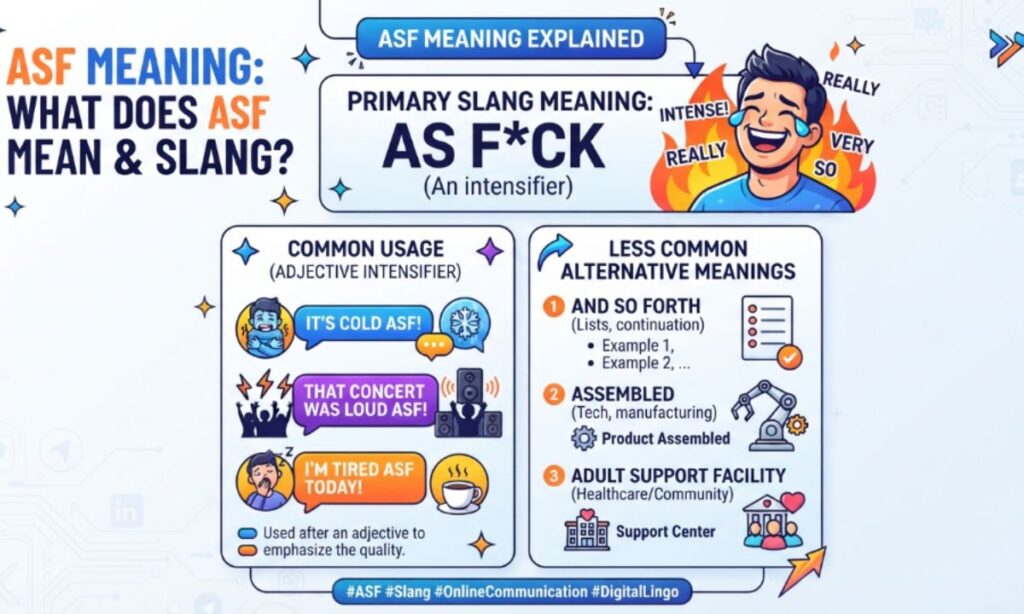
The most common ASF definition is simple: it’s a slang intensifier standing for “as f***.” So what does ASF mean when your friend texts it? It’s ASF meaning explained in one line — a shortcut for “very” or “extremely” that adds emotional punch.
- ASF meaning online: “This show is funny ASF” = extremely funny
- ASF abbreviation meaning: replaces words like “very,” “so,” or “really”
- Common in texting, DMs, comments, and captions
Because it’s rooted in profanity, ASF internet slang stays informal — it’s not something you’d use in a work email or a school assignment.
Other Meanings of ASF (Full List)
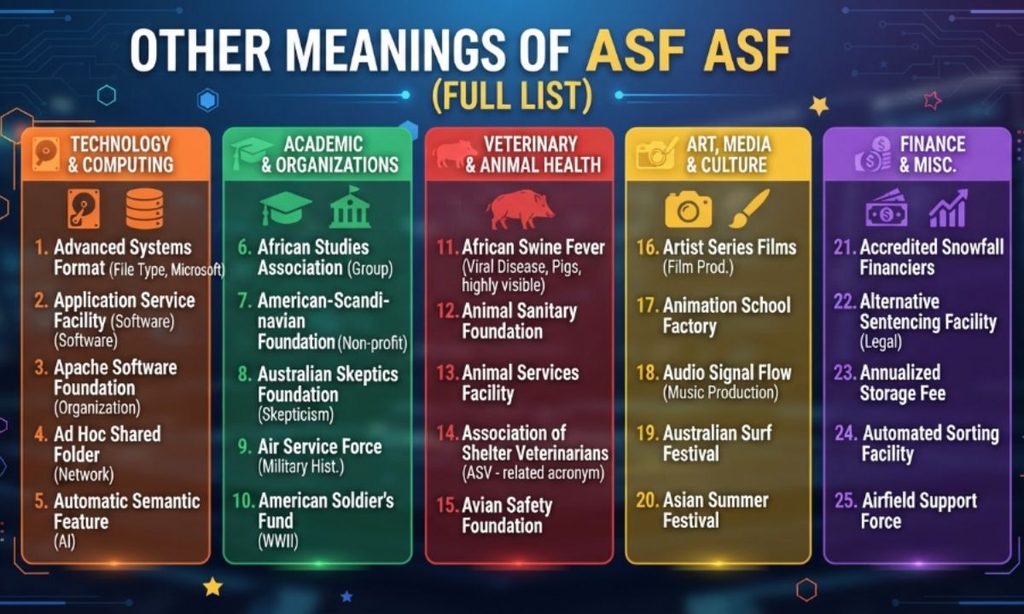
ASF isn’t a one-meaning acronym. Context decides everything — here’s what it can stand for outside of texting slang.
African Swine Fever
In agriculture and veterinary news, ASF refers to a serious viral disease affecting pigs and wild boar. It spreads rapidly and has high mortality rates among infected animals. There’s currently no widely available vaccine, so prevention through biosecurity is the main defense.
Apache Software Foundation
In tech circles, ASF refers to the nonprofit that oversees open-source software projects like Apache Kafka and Apache Spark. It has nothing to do with slang — this is a formal, organizational use of the acronym.
Advanced Systems Format
Microsoft developed ASF as a digital container format for streaming audio and video. It’s largely legacy technology now, replaced by newer formats, but the term still surfaces in older tech documentation.
Age, Sex, From (Dating Chats)
In older chatroom culture, ASF was a quick way to ask someone’s basic profile — similar to the classic “ASL” (Age, Sex, Location). It’s rare today but occasionally still appears in throwback internet slang discussions.
And So Forth
Rarely, ASF has been used as a formal shorthand for “and so forth,” similar to “etc.” This usage is uncommon in modern texting and shows up mostly in older written documents.
Origin and Background of ASF
ASF texting abbreviation grew out of early 2010s internet slang, where users shortened explicit phrases to type faster and dodge profanity filters. It reflects broader digital linguistic evolution — language constantly adapting to new platforms and typing habits. As casual expression and informal language became the norm in DMs and comments, abbreviations like ASF spread fast.
Linguists sometimes describe ASF as a pragmatic marker — a small word that doesn’t change literal meaning but boosts emotional weight. It rode the wave of Gen Z slang and Gen Z texting culture, spreading through group chats, forums, and eventually mainstream social apps.
ASF Meaning on TikTok & Social Media
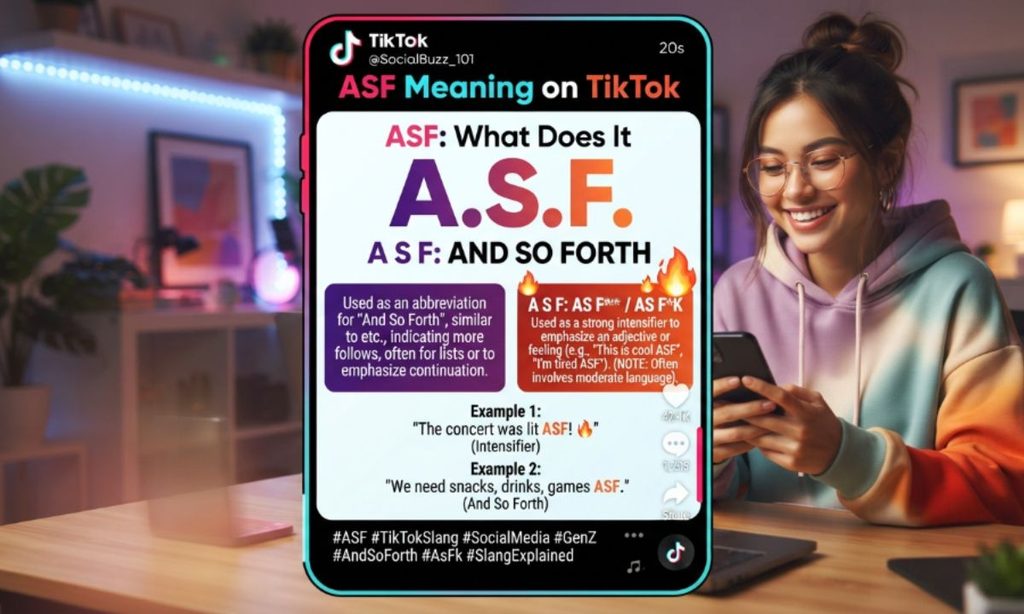
ASF social media captions are everywhere — from Instagram to Twitter/X. Creators lean on it because it’s short, expressive, and fits the fast, punchy tone of short-form content.
| Platform | Example | Tone |
| ASF in Instagram captions | “Sunset views ASF 🌅” | Excitement |
| ASF in TikTok comments | “This trend is funny ASF” | Admiration |
| ASF in Twitter/X posts | “Traffic is bad ASF today” | Frustration |
This flexibility is exactly why ASF meaning social media use keeps growing — it fits almost any emotion, in almost any post. ASF usage in daily life extends the same pattern to regular texting between friends, not just public posts. Over time, ASF texting culture has made the term feel less like slang and more like everyday shorthand.
Emotional Tone Behind ASF
ASF emotional tone isn’t fixed — it depends entirely on the word it follows. This requires a bit of natural tone detection and emotion recognition on the reader’s part, since the same three letters can mean very different things.
- “Happy ASF” → admiration, excitement
- “Annoyed ASF” → frustration
- “Nervous ASF” → anxiety, tension
Reading ASF context in messages matters more than the word itself. That’s the core of ASF positive or negative meaning — it amplifies whatever emotion or exaggeration is already there, rather than creating a new one. Informal sentiment analysis of casual texts shows the acronym leans neutral-to-positive far more often than negative.
Read Also This Blog PMO Meaning
ASF Examples in Real Conversations
Seeing ASF intensity in language in action makes it easier to use correctly. Here are natural, everyday examples:
- “I’m starving ASF right now”
- “That movie was boring ASF”
- “You’re funny ASF, stop”
- “This traffic is annoying ASF”
Each example shows emphasis or exaggeration doing the heavy lifting — ASF just makes the feeling land harder without needing extra words.
ASF Meaning on Dating Apps
On apps like Tinder, Bumble, and Hinge, ASF often shows up as a playful compliment: “Your profile is cute ASF 😄.” It signals casual, confident flirting rather than anything formal or serious.
Using it well here comes down to staying culturally fluent — reading the vibe of the chat before dropping slang. Overusing ASF too early in a conversation can come off as try-hard rather than genuine.
How Do You Pronounce ASF?
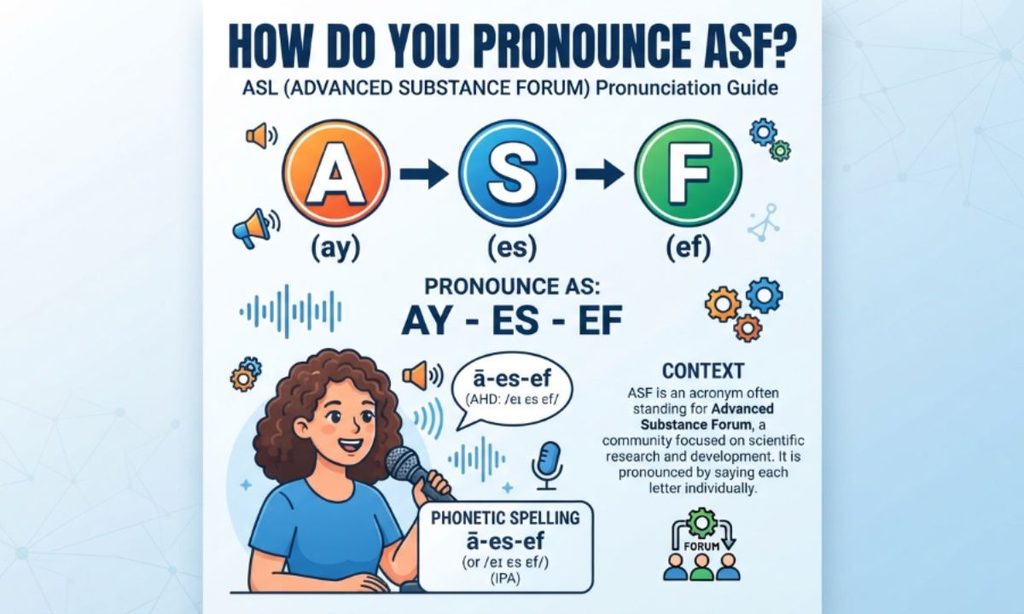
Most people don’t actually say “A-S-F” out loud — they either spell it in text or say the full phrase “as f***” when speaking. Saying the letters individually is rare and can sound awkward in conversation.
ASF vs AF vs ASL: Key Differences
| Term | Full Meaning | Tone | Common Platform |
| ASF | As f*** | Casual, intense | Texting, Instagram, TikTok |
| AF | As f*** | Casual, sharper | Twitter/X, texting |
| ASL | Age, Sex, Location | Neutral, informational | Old chatrooms, Discord |
AF (as f***) is the more widely used shorthand, while ASF vs AF really just comes down to personal typing habit. Some throw in OMG or LOL alongside either one for extra emphasis: “OMG this is funny ASF, LOL.” Formal alternatives like very, extremely, really, or so work the same job without the edge.
Is ASF Rude or Offensive?
Is ASF formal or informal? Always informal — it’s built on a swear word, so it doesn’t belong in professional emails, school papers, or conversations with people you don’t know well.
Is ASF positive or negative on its own? Neither — it’s neutral until paired with an adjective. “Sweet ASF” is a compliment; “rude ASF” is a callout. The acronym itself carries the volume, not the judgment.
Common Misunderstandings About ASF
Misunderstanding 1 — ASF is always an insult
People sometimes assume ASF is aggressive by default. In reality, it’s just as common in compliments as in complaints.
Misunderstanding 2 — ASF is a typo for “as if”
These are two completely different expressions. “As if” expresses disbelief, while ASF intensifies a feeling.
Misunderstanding 3 — ASF has only one meaning
As covered earlier, ASF meaning in pigs, ASF meaning in business, and ASF meaning in English tech contexts all exist alongside the slang use. Context is everything.
How to Reply to ASF Texts
Where is ASF commonly used? Mostly in casual replies among friends — so matching that same relaxed tone works best.
- If they say “I’m tired ASF” → reply with empathy, like “Same, get some rest”
- If they say “This is funny ASF” → react with humor or an emoji
- Avoid over-explaining; a short, casual reply keeps the tone natural
How to Use ASF the Right Way
ASF meaning for beginners boils down to one rule: place it after the adjective, not before. “I’m tired ASF” works — “ASF I’m tired” doesn’t.
- Use it only in casual texts, captions, or comments
- Avoid it in emails, resumes, or formal writing
- Don’t overuse it — repetition weakens the emphasis
Can teenagers use ASF? Yes, and they’re the primary users — but it’s worth understanding the swear-word root before using it around teachers, parents, or in school settings.
Why ASF Trends in Digital Slang
Why do people search ASF meaning so often? Because it shows up constantly in texts and comments, and not everyone recognizes it right away. Staying culturally fluent in digital communication means keeping up with fast-moving Gen Z slang like this.
ASF reflects a bigger pattern: short, expressive language wins on platforms built for speed. As long as texting and social captions stay brief, terms like ASF will keep showing up in everyday digital communication.
Frequently Asked Questions
What Does ASF Meaning Mean in Chat?
ASF meaning in chat refers to “as f***,” a slang intensifier used to amplify emotions or descriptions, like “tired ASF” meaning extremely exhausted or worn out.
ASF Meaning in Gen Z: What Does It Mean?
ASF meaning in Gen Z culture centers on intensifying feelings casually. Teens use it in captions and texts to express excitement, frustration, or admiration quickly online.
Is ASF Meaning Considered a Slang Word?
Yes, ASF meaning is purely internet slang derived from “as f***.” It’s informal, casual, and unsuitable for professional writing, emails, or formal conversations of any kind.
Is ASF Meaning the Same as AF?
ASF meaning and AF share the same root phrase, “as f***.” AF is shorter and more common, while ASF stays closer to the full spoken expression.
Can ASF Meaning Be Used at Work?
No, ASF meaning stems from profanity, making it inappropriate for workplace emails, professional messages, or formal conversations. Stick to casual texts, captions, or friend group chats.
Does ASF Meaning Change With Tone?
Yes, ASF meaning shifts entirely based on context. “Happy ASF” shows excitement, while “annoyed ASF” shows frustration — the word before it carries all the emotion.
Conclusion
ASF meaning ultimately comes down to context. As slang, ASF stands for “as f***,” working as an intensifier that turns “tired” into “tired ASF” or “funny” into “funny ASF.” It’s casual, expressive, and built for texting, captions, and comments — never for formal writing or professional emails.
Beyond slang, ASF meaning shifts entirely by field: African Swine Fever in agriculture, Apache Software Foundation in tech, or Advanced Systems Format in older media files. Each version depends on where and how the term appears.
