

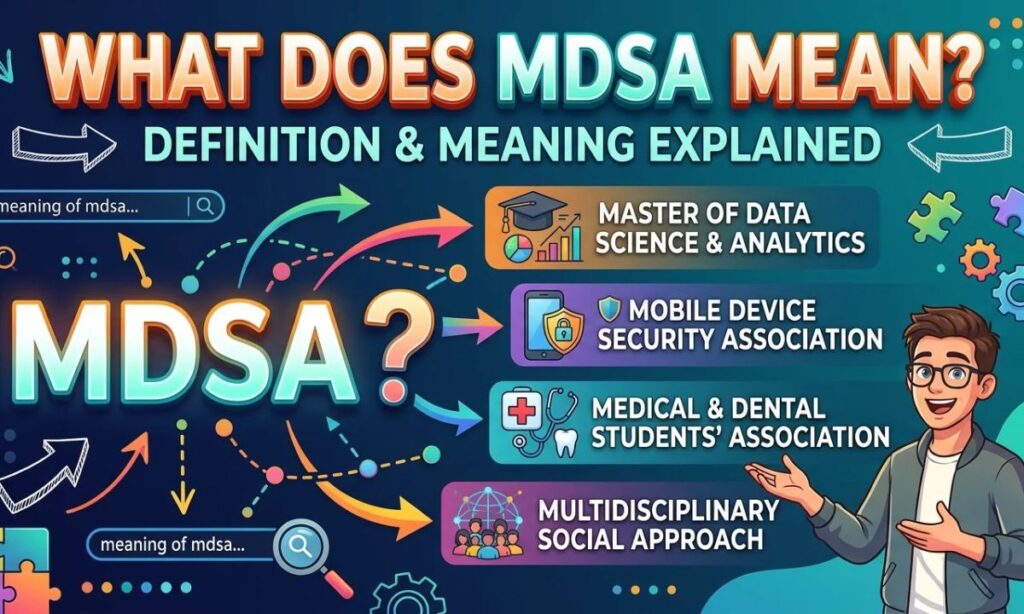
Did you just see the word “MDSA” and feel uneasy? Maybe it came up on social media. Maybe you searched it late at night, not sure you wanted the answer. If so, you are not alone, and your reaction makes sense.
This guide explains what MDSA means in calm, simple words. It avoids graphic detail. You will learn what the term covers, why this kind of abuse is so often missed, and how to find support.
What Does MDSA Mean?
MDSA describes a mother sexually abusing her own daughter. Like all child sexual abuse, it is about a parent misusing the trust and power a child depends on.
It does not refer to one single act. It can include sexual touching, showing a child sexual material, forcing or pressuring a child, or crossing body boundaries while calling it “normal parenting.” The common thread is a betrayal by the person who was supposed to keep the child safe.
Is MDSA an Official Diagnosis?
No. MDSA is not a diagnosis in a medical manual. It is a descriptive term used by survivors, advocates, and some therapists.
It does appear in research. A 2022 study by Lin, Young, and Guarino, published in Children and Youth Services Review, explored survivor accounts and called this a stigmatized, under-studied form of abuse. Some clinicians and support groups have also used the term for decades.
So the word is not a trend. It gives survivors a name for something that long went unnamed.
Why Is This Abuse So Easy to Miss?
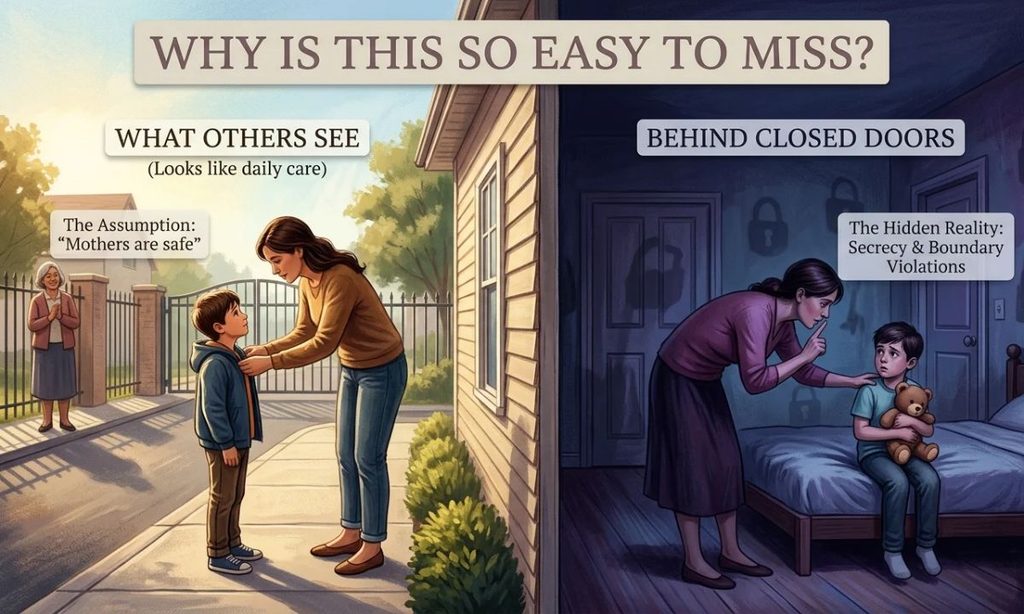
This abuse can be easy to miss because it often happens behind closed doors and may be hidden by fear, shame, manipulation, or family secrecy. Victims may struggle to speak up, while others may mistake warning signs for normal family behavior or misunderstand the seriousness of the situation.
People Believe Mothers Are Always Safe
Most of us grow up thinking mothers protect and nurture. That idea is so deep that many people simply cannot imagine a mother causing this kind of harm.
Survivors may feel it too. When memories clash with that belief, they often doubt themselves first. They may explain the behavior away as strictness, odd habits, or being “very close.”
Abuse Can Look Like Daily Care
Mothers often handle things that involve a child’s body, such as bathing, dressing, and caring for them when they are sick. These tasks are healthy when done respectfully and for the child’s age.
Problems begin when care becomes a cover for crossing the line. Since it can look ordinary from outside, relatives, teachers, and even professionals may not notice.
Read Also This Blog 274+ Boy Names That Mean Love and Strength
How Care and Boundary Violations Differ
| Healthy care | Possible boundary violation |
| Gives more privacy as the child grows | Stays physically involved past what suits the child’s age |
| Is open and easy to explain | Comes with secrecy or “don’t tell anyone” |
| Leaves the child feeling safe | Leaves the child confused, ashamed, or uneasy |
| Stops when the child objects | Continues despite discomfort or distress |
This table is a guide, not a diagnosis. A licensed professional can help you understand your own situation. Still, it can match the feeling many survivors describe: “something was not right.”
Why Survivors May Realize It Years Later
A child learns what is normal from the adults at home. If the adult is the one crossing the line, the child has nothing to compare it to. Behavior that would alarm us coming from a stranger can feel routine coming from a parent.
Many people only see the truth in adulthood, often after learning what healthy boundaries look like. That delay is not denial. It happens because no one gave the child the words.
For many, hearing the term “MDSA” is the moment confusing memories finally fit together.
You Can Love Someone Who Hurt You
Many survivors still loved their mothers and wanted their approval. This does not make the abuse less real. It shows how tangled these relationships can be.
These mixed feelings can make speaking up feel like betrayal, even though the survivor did nothing wrong.
How MDSA Can Affect Survivors
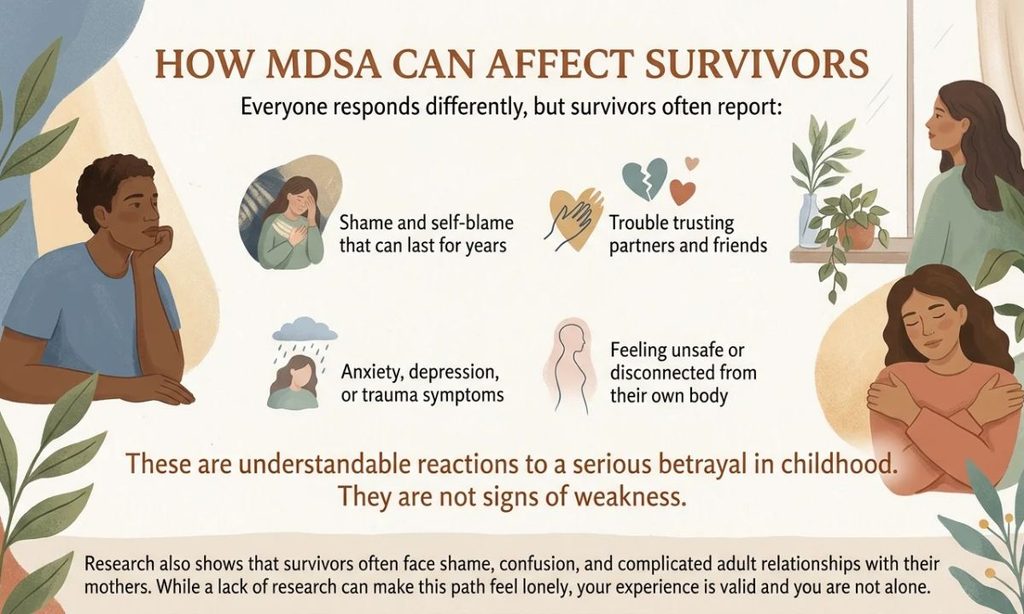
Everyone responds differently, but survivors often report:
- Shame and self-blame that last for years
- Trouble trusting partners and friends
- Anxiety, depression, or trauma symptoms
- Feeling unsafe or disconnected from their own body
These are understandable reactions to a serious betrayal in childhood. They are not signs of weakness.
The 2022 study above also found that survivors often felt shame and confusion and that many had complicated relationships with their mothers as adults. It stressed how little research exists. That gap is one reason survivors feel so alone, even though they are not.
Read Also This Blog TY Meaning in Text
Why Many Survivors Stay Silent
Fear of not being believed. Many worry that people will refuse to accept that a mother could do this. That fear is realistic. Some survivors have met shock or denial when they finally spoke.
Isolation. Because MDSA gets so little attention, survivors may think they are the only ones. They are not. Simply learning the term can ease that loneliness and show that real research and communities exist.
Does MDSA Only Affect Daughters?
The term names mothers and daughters because that is the pattern most often studied and discussed. But sons and non-binary children can also be abused by their mothers. The same problems often appear, including abuse hidden in care, disbelief from others, and delayed understanding.
If your experience does not fit the label exactly, it still matters, and you still deserve support.
Where to Find Help
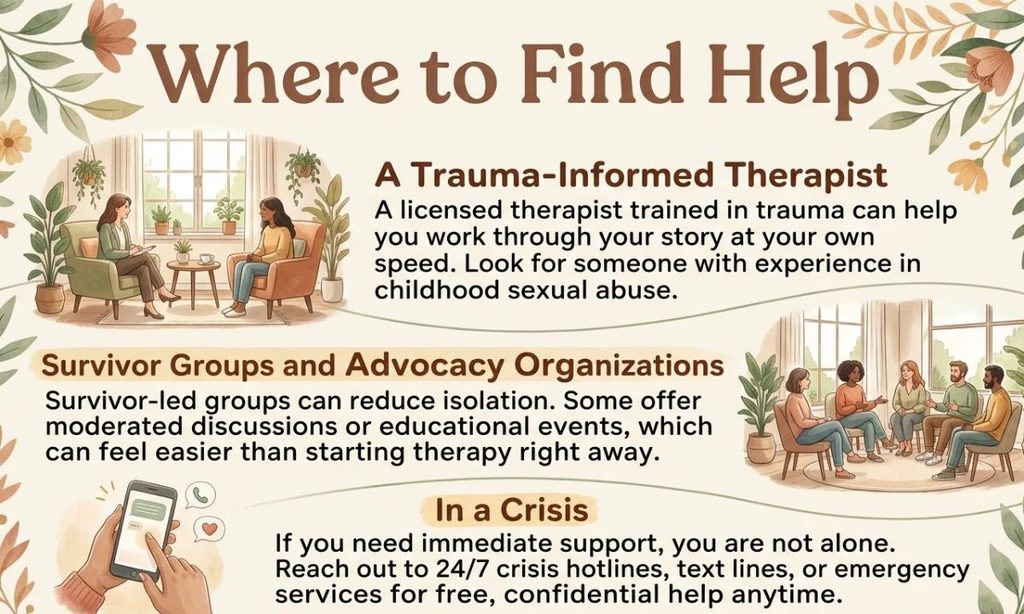
A Trauma-Informed Therapist
A licensed therapist trained in trauma can help you work through your story at your own speed. Look for someone with experience in childhood sexual abuse.
Survivor Groups and Advocacy Organizations
Survivor-led groups can reduce isolation. Some offer moderated discussions or educational events, which can feel easier than starting therapy right away.
Read Also This Blog DNI Meaning in Text
In a Crisis
In the United States, the RAINN National Sexual Assault Hotline is available at 1-800-656-4673. It is free, runs 24/7, and is confidential in most cases. If you are in another country, search for a local sexual assault or child protection helpline. If a child may be in immediate danger, contact local emergency services or child protection authorities right away.
FAQs About MDSA
What does MDSA stand for?
It stands for Mother-Daughter Sexual Abuse, a term used in research, therapy, and survivor advocacy.
Is MDSA a form of child sexual abuse?
Yes. It involves the same core issues as other child sexual abuse: broken boundaries, unequal power, and betrayed trust.
Why do so few people know the term?
Because many people assume mothers are always safe, this abuse is harder to see, discuss, and research.
Is it normal to realize it years later?
Yes. Many survivors need time and a better understanding of healthy boundaries before they can name what happened.
Can therapy help?
Many survivors find it helpful, especially with a trauma-informed therapist. It cannot undo the past, but it can help you process it and move forward.
Final Thoughts
MDSA means Mother-Daughter Sexual Abuse. It is a form of child sexual abuse that is still poorly understood and often hidden. If you have spent years doubting yourself, it does not mean something is wrong with you. It means your experience was rarely talked about.
You do not need every answer before you reach out. Healing takes time, but support and recovery are possible.
